What Are Three Types Of Infectious Agents. These are also called pathogens (gr. Helicobacter pylori is linked to stomach cancer and peptic.
Infection And Immunity | Oncohema Key from oncohemakey.com
Bacteria can survive in any environment from extreme heat to extreme cold and even radioactive. In addition, a new class of infectious agents, the prions, has recently been recognized. Idea for use in the classroom.
Viruses, Bacteria, Fungi, Protozoa, And Worms.
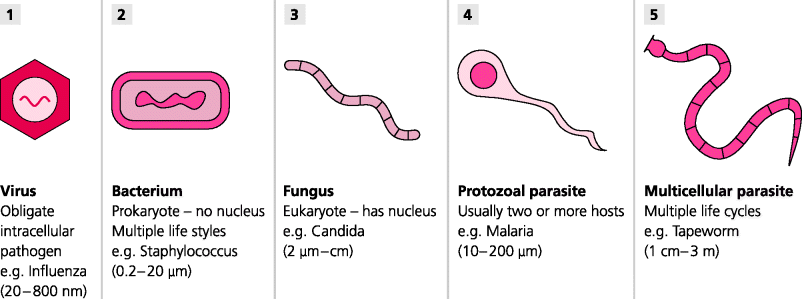
The five main types of infectious agents are bacteria, protozoa, viruses, parasitic worms, and fungi. There are four main types of infections: • the virion consists of the specific nucleic acid (dna or rna) surrounded by a protein coat (capsid).
They Include Bacteria, Fungi, Viruses, And Parasites.
Some common pathogens in each group are listed in the column on the right. Some viruses can disrupt signaling that normally keeps cell growth and proliferation in check. Human papillomavirus is linked to cervical cancer;
Describe Three Direct Counting Methods And Two Indirect Counting Methods Used To Enumerate Viruses.
Certain infectious agents, including viruses, bacteria, and parasites, can cause cancer or increase the risk that cancer will form. Moreover, what are the major types of infectious agents? Infectious agents are tiny organisms that can invade your body, sometimes causing sickness.
Helicobacter Pylori Is Linked To Stomach Cancer And Peptic.
These are also called pathogens (gr. Distinguish lethal dose from infectious dose. A brief review of the general characteristics of each of these agents and examples of some diseases they cause follows.
Allow Students To Collaborate Or Work Independently.
Infectious agents cause a wide variety of diseases affecting various parts of the body. Click to see full answer. The agents that cause disease fall into five groups: